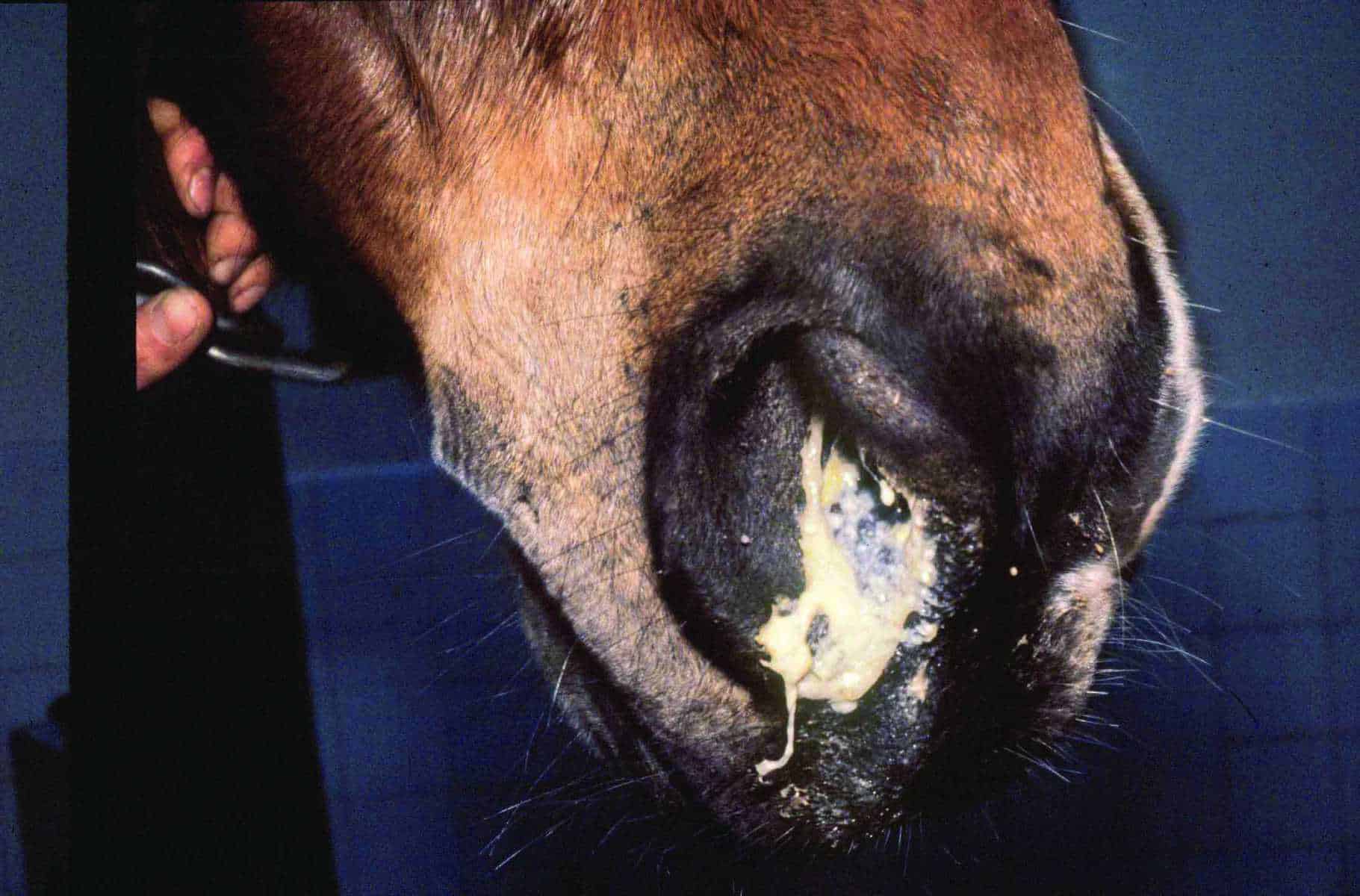
Photo: Professor Derek Knottenbelt
Strangles is a word that strikes fear into the heart of every horse owner. Despite the fact that it’s one of the most common equine diseases in the UK, there is a lot of misinformation out there, which only adds to the anxiety.
We spoke to the British Horse Society (BHS) to find out the facts behind this highly contagious disease.
What exactly is strangles?
Strangle is a contagious upper respiratory tract infection, caused by the bacterium Streptococcus equi. It got the name ‘strangles’ because in the past, affected horses were sometimes suffocated from inflamed lymph nodes in their upper airway and trachea.
It can affect any age, sex or breed of horse and is highly contagious. The severity and number of clinical signs vary between individual horses. Young, elderly and debilitated horses are often most susceptible, but it is important to remember all horses are at risk.
How is strangles spread?
Strangles can be spread by direct contact between horses (eg nose to nose contact) or indirectly by handlers, equipment or contamination. For example:
- Equipment shared with infected horses, such as water troughs where the bacterium can survive for long periods
- Feed buckets
- Grooming equipment
- Tack
What are the symptoms?
Clinical signs are not usually seen until three to 14 days after the horse has been in contact with the bacterium. These signs include:
- Depression and dullness
- Loss of appetite
- Nasal discharge
- Development of a cough
- High temperature
- Swelling of the lymph nodes (glands) under the jaw or on the head or neck, which can lead to abscess formation at a later stage.
Is it always obvious a horse has the disease?
Unfortunately not. Outwardly healthy horses are often overlooked at not being a risk, but it is important to remember:
- A horse may be infected, but not yet showing any clinical signs
- A horse may have atypical strangles – which is where infected horses display less, or even no clinical signs
- Carriers can intermittently shed the bacteria for months or years
- Horses not yet fully recovered from the disease can still shed the bacteria.
What is a carrier?
Around 10% of infected horses become carriers even though they have recovered and appear healthy. Carriers become persistently infected when abscess material forms in the guttural pouches (air sacs in the back of the throat) and is not completely eliminated. The bacteria can survive in the guttural pouch for months or even years. IF YOU HAVE ANY CONCERNS FOR YOUR HORSE’S HEALTH CONTACT YOUR VET.
How is strangles diagnosed?
There are currently three tests available, which can be carried out by your veterinary surgeon:
1. A blood test, which identifies the presence of antibodies to S.equi in the horse’s bloodstream. Results come back within 24-hours. However, as it takes up to two weeks for a horse to develop these antibodies it may not be possible to identify in the early stages of the disease. The blood test can identify:
- Horses that are currently affected
- Horses that have been infected with strangles in the last six months and have recovered
- Horses that have been previously infected and have become carriers.
2. Guttural pouch endoscopy.
3. A series of three clear nasopharyngeal swabs, taken at weekly intervals, testing for the presence of the bacterium.
What should we do if we suspect a horse on our yard has strangles?
All suspect horses should be isolated immediately, including any other horses they have been in contact with. Isolation plays an important role in preventing further disease spread. The Strategy to Eradicate and Prevent Strangles (STEPS) provides detailed information on isolation procedures.
You should also disinfect all food and water containers, clothing, stabling and equipment used by an infected horse.
A strangles outbreak can last for many months on premises with inadequate isolation procedures.
How is strangles treated?
Each case of strangles should be individually discussed with your vet to decide the most appropriate treatment. Most affected horses recover within a few weeks, as long as you follow strict biosecurity measures (see below). Treatment is available for carriers to remove the persistent infection. Once the material is removed these horses can continue to lead healthy lives and no longer pose an infection threat to other horses.
How can we prevent strangles coming to our yard?
It is important for yard owners to implement a strict isolation procedure for new arrivals. Many yard owners request new arrivals have a clear blood test before they come on to the premises.
Strict hygiene and biosecurity play a vital role in the prevention, control and spread of the disease.
- The most effective way to prevent a strangles outbreak is to quarantine new arrivals for a minimum of two weeks. This means no direct or indirect contact between a new horse and other animals, or equipment used by other horses.
- Horses that appear to be disease-free after this quarantine period only pose a risk if they are a carrier. The blood test will help to detect a carrier status of a horse.
- Disinfect the horsebox before and after collecting any new horses.
- A vaccine for strangles is available. Contact your veterinary surgeon for further information.
For more great veterinary advice watch our Vet Essentials series online, which takes an in-depth look at a range of common issues affecting horses.