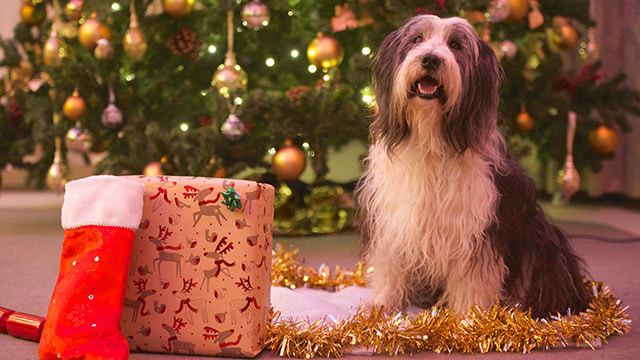
The Kennel Club is reminding dog owners of ways to keep their pets safer this Christmas.
Dogs dinner
While you’re tucking into more turkey or nibbling on festive nuts, don’t forget to keep an eye on your pet who might want to get their paws on your presents or Christmas treats.
Nick Sutton, Kennel Club health information officer and former veterinary toxicologist, advises buying your dog some new toys to distract him and to give him a plenty deal of exercise outside.
“Many dogs die or become very ill every Christmas from eating things they shouldn’t and this is mostly avoidable,” he said. “Try to remember that many items associated with Christmas can be very tempting but harmful for a dog, particularly if left unattended.”
Food
According to the Kennel Club, foods that should be completely avoided include chocolate, raisins, grapes, currants, sultanas, Christmas cake, Christmas pudding, fruit cake, mince pies, macadamia nuts, blue cheese and allium species, which include onions, garlic, leeks, shallots and chives.
Mouldy foods, rich, fatty foods and alcohol can also harm dogs, whileturkey, goose and chicken bones can easily splinter, particularly when cooked.
Plants
Most Christmas trees are low-toxic but oils from the needles can irritate the mouth and stomach or can cause an obstruction if ingested.
Other festive plants that can cause stomach upset if eaten by a dog include poinsettia, holly, mistletoe and ivy.
Presents
All those exciting packages are just as much fun for your dog as for you, so don’t leave things lying around for him to chew.
Items which may obstruct a dog’s airways include small gifts, wrapping paper, Christmas decorations and plastic materials used for wrapping presents.
Electronic gifts and toys often contain batteries, which if chewed and punctured by a dog can also cause chemical burns.
Signs of airways obstruction include vomiting, lethargy, a lack of interest in food, not defecating or finding it difficult to defecate.
Antifreeze
We’ve never tasted antifreeze, but apparently it has sweet taste, which makes it tempting for dogs. It’s also highly toxic as it contains the chemical ethylene glycol, so make you store products in secure containers away from pets.
“If you believe your dog has eaten anything it shouldn’t have, seek veterinary advice immediately and let the vet know what your dog has eaten, when it ate it and how much was consumed,” said Nick.“Never try and make your dog sick if it eats something it shouldn’t have, as this can make things worse.”